This page walks through a successful 5G NR Standalone registration and PDU session establishment over a simulated non-terrestrial network. The decoded messages come from an Amarisoft Callbox export captured on 17 June 2026. The cell operates in FDD band n256 with PCI 500 and a Release 17 NTN system-information configuration.
NOTE: The extracts below retain only fields needed to explain the procedure. Subscriber identifiers and security material are omitted. Amarisoft also provides an interactive sample-log tutorial.
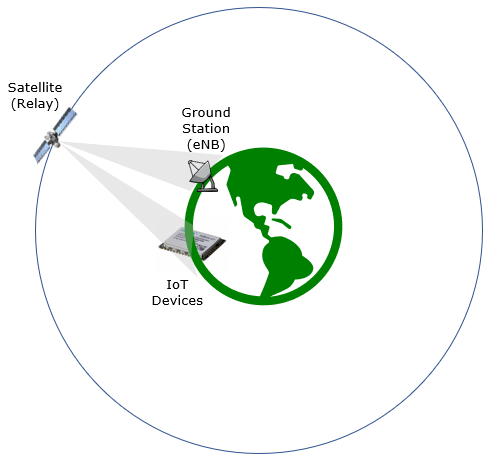
Test Profile
The test profile establishes the radio, cell, UE, and data-session context for interpreting the call flow. These values describe the supplied sample trace and are not general configuration requirements for every NR NTN deployment.
Item | Value observed in the sample |
|---|---|
Radio access | NR Standalone, FDD, band n256, subcarrier spacing 15 kHz |
Cell | PCI 500, 79 PRB downlink and uplink, PLMN 001/01 |
NTN scenario | LEO satellite information signaled by NG-RAN; NTN assistance delivered in SIB19 |
UE capability | Release 18 UE with Release 17 NTN capability, uplink pre-compensation, uplink TA reporting, and NTN HARQ extensions |
Data session | DNN |
Call Flow Overview
The overview follows the complete procedure from NTN system-information acquisition and random access through 5GS registration, security activation, UE capability exchange, and establishment of an operational PDU session.
Step |
Phase |
Direction |
Message |
|---|---|---|---|
System information | gNB to UE | SIB1, SIB2, and SIB19NTN: SIB19 supplies the common TA and drift, orbital ephemeris, cell-specific K offset, service time, and TA-report enablement. | |
Random access | UE to gNB | PRACH preamble (Msg1)NTN: The UE applies uplink timing and frequency pre-compensation derived from SIB19 assistance before transmitting PRACH. | |
Random access | gNB to UE | Random Access Response (Msg2)NTN: The RAR completes residual timing alignment while the scheduler allows for the extended satellite propagation delay. | |
RRC connection | UE to gNB | RRCSetupRequest on Msg3NTN: The RRC payload has no NTN-specific IE; Msg3 follows the NTN-adjusted RAR grant and UE uplink pre-compensation. | |
RRC connection | gNB to UE | RRCSetup and contention resolution (Msg4)NTN: The RRCSetup PDSCH uses | |
Registration | UE to gNB | RRCSetupComplete carrying NAS Registration RequestNTN: The RRC/NAS payload is unchanged; its uplink PUSCH grant uses | |
NAS security | UE and AMF | Authentication Request/Response and NAS Security Mode Command/Complete | |
AS security | gNB and UE | RRC SecurityModeCommand/Complete | |
Capability | gNB and UE | UECapabilityEnquiry/UECapabilityInformationNTN: The UE reports NTN operation, uplink pre-compensation, TA reporting, NTN HARQ modes, and NTN mobility support. | |
Registration | AMF to UE | Registration Accept in RRCReconfigurationNTN: The RRC configuration sets | |
RRC configuration | UE to gNB | RRCReconfigurationComplete | |
Registration | UE to AMF | Registration Complete | |
PDU session | UE to SMF | PDU Session Establishment Request | |
PDU session | SMF to UE | PDU Session Establishment Accept and DRB configurationNTN-related: DRB1 uses | |
PDU session | UE to gNB | RRCReconfigurationComplete; PDU Session Resource Setup Response |
Detailed Message Sequence
The following sections expand the overview with selected decoded fields from each signaling stage. They distinguish standard NR and 5GS procedures from the NTN assistance, timing extensions, and capability signaling observed in the trace.
1. NTN system information: SIB1, SIB2, and SIB19
The UE first acquires SIB1. In addition to the normal cell-selection and initial BWP parameters, SIB1 schedules SIB19 using si-SchedulingInfo-v1700. SIB2 supplies common reselection parameters. SIB19 is the NTN-specific block and provides the timing and orbital assistance needed before access.
{
  "SIB1": {
    "frequencyBandList": [
      { "bandNR": 256 }
    ],
    "carrierBandwidth": 79,
    "si-SchedulingInfo-v1700": ["sibType19"]
  },
  "SIB19-v1700": {
    "ntn-Config-r17": {
      "ntn-UlSyncValidityDuration-r17": "s5",
      "cellSpecificKoffset-r17": 36,
      "ta-Info-r17": {
        "ta-Common-r17": 3564382,
        "ta-CommonDrift-r17": -222329,
        "ta-CommonDriftVariant-r17": 695
      },
      "ephemerisInfo-r17": {
        "type": "orbital-r17"
      },
      "ta-Report-r17": "enabled"
    },
    "t-Service-r17": 399071060523
  }
}cellSpecificKoffset-r17extends scheduling timing to account for the long NTN propagation delay.- The common TA, drift, and drift-variation values give the UE the cell-level timing model.
- The orbital ephemeris lets a location-aware UE estimate satellite motion and perform uplink timing/frequency pre-compensation.
ta-Report-r17indicates that UE timing-advance reporting is enabled for this cell.
2. Random access and RRC setup
After applying the NTN assistance, the UE transmits a PRACH preamble. The gNB responds with a Random Access Response, including the uplink grant and timing adjustment. The UE then sends RRCSetupRequest in Msg3 and receives RRCSetup in Msg4.
{
  "randomAccessAndRrcSetup": [
    {
      "timestamp": "14:31:15.662",
      "direction": "UL",
      "channel": "PRACH",
      "sequenceIndex": 6,
      "timingAdvance": 28
    },
    {
      "timestamp": "14:31:15.663",
      "direction": "DL",
      "message": "RandomAccessResponse",
      "raRnti": "000f"
    },
    {
      "timestamp": "14:31:15.709",
      "direction": "UL",
      "channel": "CCCH-NR",
      "message": "RRCSetupRequest",
      "establishmentCause": "mo-Signalling"
    },
    {
      "timestamp": "14:31:15.709",
      "direction": "DL",
      "channel": "CCCH-NR",
      "message": "RRCSetup",
      "radioBearerConfig": {
        "srbToAdd": [1]
      }
    }
  ]
}
The initial-setup physical-layer records use k1=40 and k2=40. Later dedicated scheduling uses k1=35 and k2=35. These large offsets are trace-level evidence that the scheduler has allowed for a substantially larger round-trip delay than a terrestrial cell.
3. RRCSetupComplete and Registration Request
The UE confirms the RRC connection with RRCSetupComplete. Its dedicatedNAS-Message contains a 5GMM Registration Request for initial registration. The UE also signals support for uplink RRC segmentation.
{
  "timestamp": "14:31:15.865",
  "direction": "UL",
  "channel": "DCCH-NR",
  "message": "RRCSetupComplete",
  "rrcSetupComplete": {
    "selectedPLMN-Identity": 1,
    "ul-RRC-Segmentation-r16": true,
    "dedicatedNAS-Message": {
      "protocol": "5GMM",
      "message": "RegistrationRequest",
      "registrationType": "initial-registration",
      "followOnRequest": true,
      "securityCapability": {
        "encryptionAlgorithms": ["EA0", "EA1", "EA2"],
        "integrityAlgorithms": ["IA0", "IA1", "IA2"]
      }
    }
  }
}
4. 5GMM authentication and NAS security
The AMF authenticates the UE through NAS messages transported in RRC DLInformationTransfer and ULInformationTransfer. After authentication succeeds, the AMF activates NAS integrity protection and ciphering.
Direction | NAS message |
|---|---|
AMF to UE | Authentication Request |
UE to AMF | Authentication Response |
AMF to UE | Security Mode Command |
UE to AMF | Security Mode Complete |
5. Access-stratum security
Once the initial context is available, the gNB separately activates RRC and user-plane security. This AS procedure must not be confused with the NAS Security Mode exchange in the previous step.
{
  "accessStratumSecurity": [
    {
      "timestamp": "14:31:16.101",
      "protocol": "NGAP",
      "direction": "core-to-gNB",
      "message": "InitialContextSetupRequest"
    },
    {
      "timestamp": "14:31:16.101",
      "protocol": "RRC",
      "direction": "DL",
      "channel": "DCCH-NR",
      "message": "SecurityModeCommand"
    },
    {
      "timestamp": "14:31:16.220",
      "protocol": "RRC",
      "direction": "UL",
      "channel": "DCCH-NR",
      "message": "SecurityModeComplete"
    }
  ]
}
6. UE capability exchange
The gNB requests the UE radio-access capability. The returned UE-NR-Capability identifies a Release 18 UE and explicitly lists NTN support required by this test.
{
  "UE-NR-Capability": {
    "accessStratumRelease": "rel18",
    "supportedBandListNR": [
      { "bandNR": 256 }
    ],
    "nonTerrestrialNetwork-r17": "supported",
    "uplinkPreCompensation-r17": "supported",
    "uplink-TA-Reporting-r17": "supported",
    "ntn-Parameters-r17": {
      "inactiveStateNTN-r17": "supported",
      "ra-SDT-NTN-r17": "supported",
      "mac-ParametersNTN-r17": {
        "harq-FeedbackDisabled-r17": "supported",
        "uplink-Harq-ModeB-r17": "supported"
      }
    },
    "ntn-CHO-OnlyLocationTimeTrigger-r18": "supported"
  }
}
The gNB forwards the resulting radio-capability information toward the core network using NGAP UE Radio Capability Info Indication.
7. Registration Accept and initial dedicated configuration
The AMF returns Registration Accept. In this trace it is delivered as a dedicated NAS message inside an RRC reconfiguration that also establishes the initial dedicated radio configuration.
{
  "downlinkMessage": {
    "direction": "DL",
    "channel": "DCCH-NR",
    "message": "RRCReconfiguration",
    "dedicatedNAS-Message": "RegistrationAccept",
    "tar-Config-r17": {
      "action": "setup",
      "offsetThresholdTA-r17": "ms0dot5",
      "timingAdvanceSR-r17": "enabled"
    },
    "nrofHARQ-ProcessesForPDSCH": "n16",
    "maxMIMO-Layers": 1
  },
  "uplinkResponse": {
    "direction": "UL",
    "channel": "DCCH-NR",
    "message": "RRCReconfigurationComplete"
  }
}
tar-Config-r17 configures when the UE should report a significant timing-offset change and permits a scheduling request for timing-advance reporting. The excerpt contains the configuration, but no separately decoded TA Report MAC CE was observed during this short procedure.
8. Registration Complete
The UE acknowledges the NAS registration result with Registration Complete, transported in ULInformationTransfer. At this point the UE is registered and can request a data session.
9. PDU Session Establishment Request
The UE sends an uplink NAS transport carrying a PDU Session Establishment Request. The request selects session ID 1, asks for IPv4v6 service, and specifies the NTN data network name.
{
  "ULNASTransport": {
    "payload": {
      "message": "PDUSessionEstablishmentRequest",
      "pduSessionIdentity": 1,
      "requestedPDUSessionType": "IPv4v6",
      "dnn": "ntn-internet"
    }
  }
}
10. PDU Session Accept and DRB setup
The core accepts the session with IPv4 service and QoS flow identifier 1. The gNB then uses another RRCReconfiguration to add SRB2 and DRB1 and map the QoS flow to the data radio bearer.
{
  "pduSessionEstablishmentAccept": {
    "selectedPDUSessionType": "IPv4",
    "pduAddress": "192.168.3.2",
    "qosFlow": {
      "qfi": 1,
      "5qi": 10
    },
    "dnn": "ntn-internet"
  },
  "rrcReconfiguration": {
    "direction": "DL",
    "channel": "DCCH-NR",
    "srbToAdd": [2],
    "drbToAdd": [1],
    "mappedQoSFlows": [1],
    "pdcpSnSizeBits": 18,
    "t-Reordering": "ms3000"
  },
  "completion": [
    {
      "protocol": "RRC",
      "direction": "UL",
      "message": "RRCReconfigurationComplete"
    },
    {
      "protocol": "NGAP",
      "direction": "gNB-to-core",
      "message": "PDUSessionResourceSetupResponse"
    }
  ]
}
The completed NGAP response confirms that the radio and core-network resources for the PDU session are active.
What Is NTN-Specific in This Flow?
Most registration and session-management messages are unchanged from terrestrial NR. The table below isolates the NTN-specific information and delay-related behavior that adapts the normal procedure to a moving satellite link.
Feature | Where it appears | Purpose |
|---|---|---|
SIB19 | Before random access | Broadcasts NTN timing, ephemeris, service time, and TA-report configuration. |
Cell-specific K offset | SIB19 | Extends scheduling timelines for the satellite propagation delay. |
Common TA and drift | SIB19 | Provides a moving timing reference that the UE can extrapolate. |
Uplink pre-compensation | UE capability | Declares that the UE can compensate its uplink using NTN assistance. |
TA reporting | SIB19, UE capability, RRC reconfiguration | Allows the network to configure and receive UE timing-change reports. |
NTN HARQ behavior | UE capability | Advertises NTN-specific HARQ feedback suppression and uplink mode support. |
Long scheduling offsets | PHY trace | Allows grants and feedback to remain valid across the long round-trip time. |
References
The following ShareTechnote material and 3GPP specifications provide the normative protocol definitions and supporting background for the decoded RRC, MAC, NAS, and NGAP messages used in this analysis.
- NR NTN RRC Parameters - SIB19 and dedicated NTN RRC configuration.
- 3GPP TS 38.331 - NR Radio Resource Control protocol.
- 3GPP TS 38.321 - NR Medium Access Control protocol.
- 3GPP TS 24.501 - 5GS NAS protocol.
- 3GPP TS 38.413 - NG-RAN NGAP protocol.
- ShareTechnote NB-IoT NTN call-flow format reference.
Trace timestamps and selected decoded fields are taken from the supplied Amarisoft export. Values may vary with satellite orbit, service link, UE implementation, and network configuration.